
Mind Spark #33: Managing Conflict with Presence
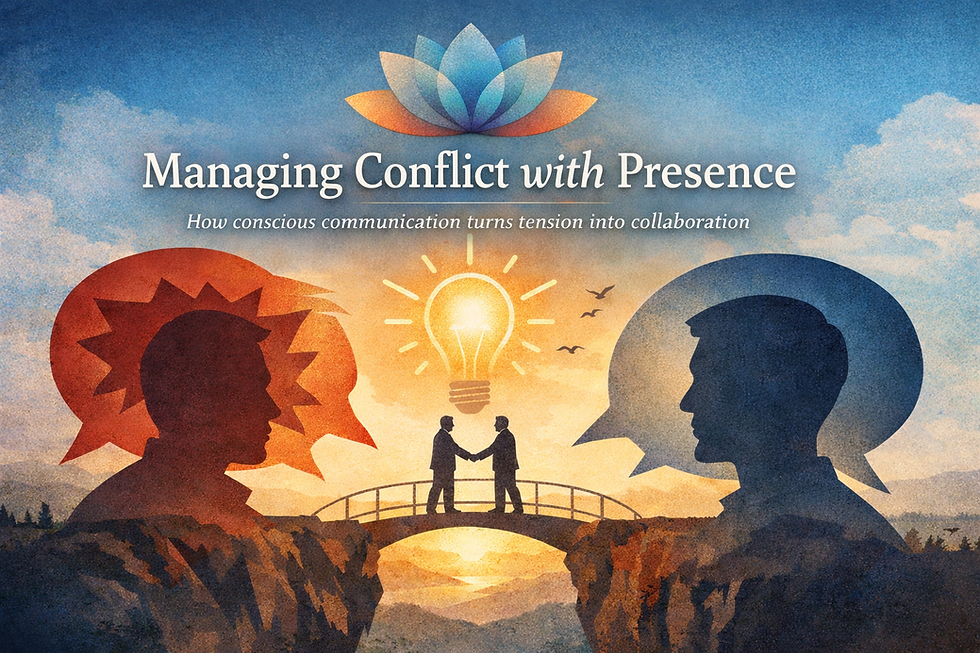
Every manager deals with conflict. We all know communication matters, but is there a simple way or framework to handle conflict better, especially when emotions run high?
On a recent episode of the Think Fast, Talk Smart podcast (#245: Mindful Messages: Leveraging the Power of Presence), host Matt Abrahams spoke with Dr. Deepak Chopra about mindfulness, conflict resolution, and the power of intention. Chopra introduced a concept he calls conscious communication, which is based on presence, authenticity, and shared purpose.
At its core, conscious communication helps turn tensions into collaborations. Instead of trying to win an argument, the goal is to create what Chopra calls “spiritual solutions”, outcomes in which different perspectives come together to create something better for everyone.
I found this podcast incredibly insightful and wanted to share it here. While I’m highlighting a few key lessons, I highly recommend listening to the podcast yourself, and you’ll get the full depth and nuance directly from the conversation.
1. Cultivate presence through the “4 As.”
Presence is the foundation of meaningful communication. Chopra reminds us that the ego often pulls us out of the moment, but we can regain presence by practicing four simple behaviors:
Attention: Deep listening without judgment
Affection: Show empathy, compassion, and calm
Appreciation: Recognize that each person and conversation is unique
Acceptance: Share our view without trying to change the other person
Quick test: During a conversation, quietly ask ourselves, “Is there presence here?” This simple question can bring us back to the moment.
2. See conflict as a source of creativity
Conflict doesn’t have to be about winning or losing. When being “right” is the goal, creativity disappears.
“Conflicts present a unique opportunity for growth and understanding” - Deepak Chopra
Chopra suggests reframing conflict by:
Start with respect: We can recover from financial loss, but humiliation leaves lasting scars. Respect sets the tone for everything that follows.
Practice nonviolent communication: Focus on facts, notice feelings, and try to meet needs rather than blame.
Invite diverse perspectives: Like doctors in Grand Rounds, we should welcome different opinions to find creative solutions.
When handled well, conflict can expand possibilities rather than shut them down.
3. Lead with authenticity and intention
When intention is grounded in integrity, which means keeping our word, and authenticity, which means being true to ourselves, Chopra says, “consciousness takes over.”
Instead of forcing outcomes, clear and meaningful intentions allow solutions to emerge naturally when the goal shifts from winning to serving a higher purpose, alignment, and often resolution come more easily.
When we let go of defensive ego and focus on presence, acceptance, and shared goals, everyday conversations can become opportunities to build trust, creativity, and well-being for ourselves and those we lead.
Next time you face a tough conversation, how might it change if presence came before persuasion?
I hope you find these lessons as helpful as I did.
Thanks for reading!


Comments